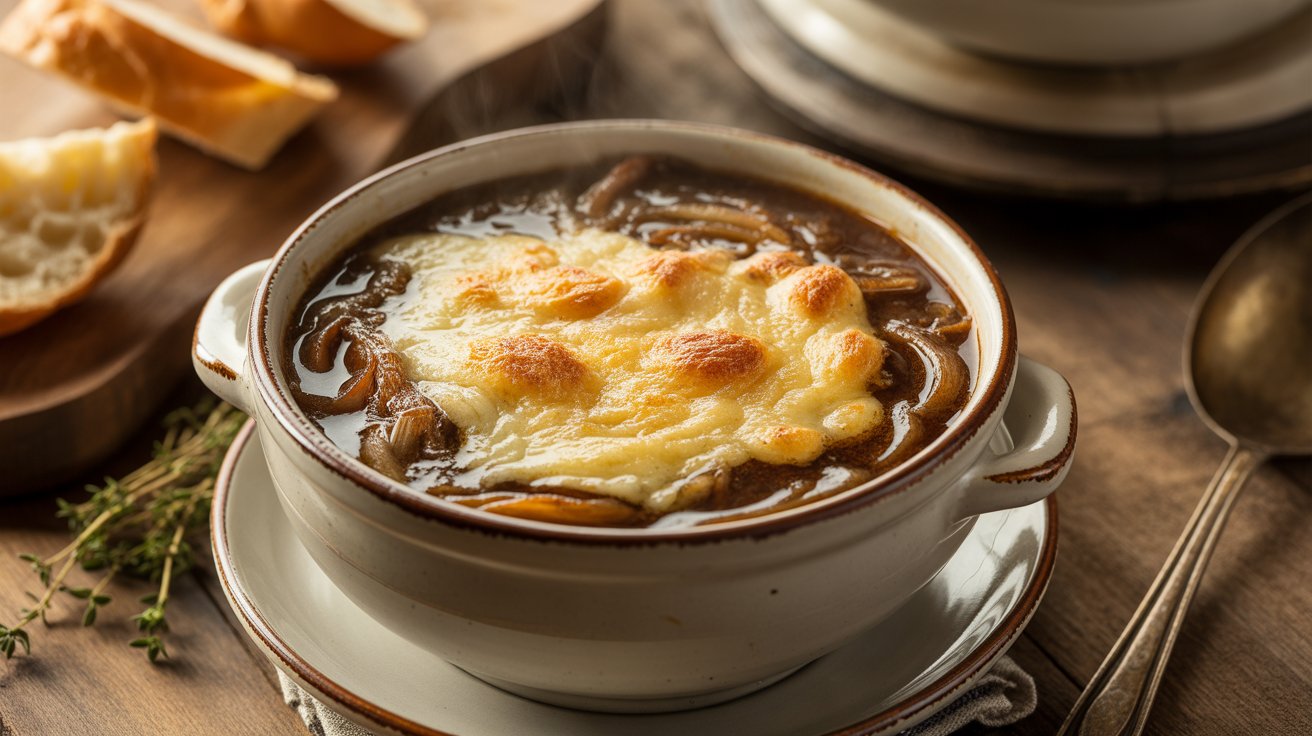
The Best French Onion Soup Recipe
If you’ve ever tasted a truly great French onion soup—the kind that hits you with that deep caramelized-onion sweetness, that rich beefy broth, and that ridiculously satisfying cheese pull—then you already know why people obsess over this stuff.
And if you haven’t?
Well, buckle up, because you’re about to make the best French onion soup of your life.
No exaggeration. Ever wondered why some versions taste flat while others feel like they came straight from a tiny café in Paris?
Let’s fix that today.
Before we get into it, I’ll admit something: I used to think French onion soup was “pretend fancy,” like it required a beret and a questionable mustache.
But after I learned the real method—and burned only two batches of onions along the way—I realized it’s actually super simple once you get the rhythm.
Plus, having the right equipment makes all the difference.
So grab a pot, grab some onions, and let’s make magic.
Why This Is the Best French Onion Soup Recipe

Ever make a recipe and think, “Okay… this is fine, but I know it could taste way better”?
That was me with every French onion soup I tried before nailing this one.
And IMO, this version wins because it focuses on three essential pillars:
1. Properly Caramelized Onions
I don’t mean “kind of browned” or “soft and slightly golden.”
I mean deeply caramelized, dark, jammy onions that bring out the soup’s signature sweetness.
This step takes time. Like, actual time. But trust me—you’ll thank yourself later.
A heavy-bottomed Dutch oven or enameled cast iron pot is absolutely essential here—it distributes heat evenly so your onions caramelize instead of burning in spots.
2. A Rich, Flavor-Packed Broth
I always use beef broth (sometimes with a little chicken broth thrown in).
You can use vegetable broth if you want, but FYI, it won’t hit quite the same. Beef broth + caramelized onions = a flavor duo that deserves its own sitcom.
3. The Cheese Factor
I won’t sugarcoat this: skimping on cheese basically counts as a crime. You need Gruyère—melty, nutty, perfect—and a little Parmesan doesn’t hurt.
Ever tried using mozzarella? I did once. Let’s just say the soup tasted confused.
Pro tip: invest in a quality box grater or microplane for shredding fresh cheese—pre-shredded just doesn’t melt the same way.
What You’ll Need (aka Your Flavor Arsenal)
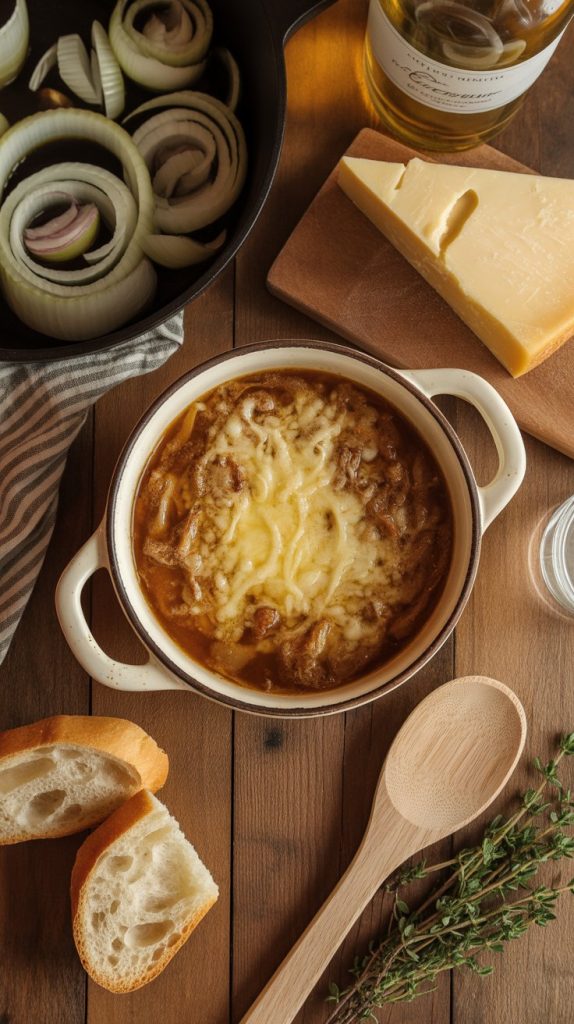
I like keeping things simple, so here’s the ultimate lineup:
- 5–6 large yellow onions (don’t swap for red onions unless you enjoy pain)
- 4 tbsp unsalted butter
- 1 tbsp olive oil
- 2 cloves garlic, minced
- 1 tsp sugar (helps onions along)
- 1 tsp salt
- ½ tsp black pepper
- 2 tbsp flour
- 8 cups beef broth (bold because it matters)
- ½ cup dry white wine (optional, but absolutely worth it)
- 1 bay leaf
- Fresh thyme sprigs
- Sliced French bread, toasted
- Gruyère cheese, shredded
- Optional: Parmesan, Swiss, or fontina for a cheese blend
Notice how short this list is? Yeah, French onion soup doesn’t come to play—it comes to show you how much flavor a few ingredients can bring when you treat them right.
Essential Tools You’ll Need
Before you start, make sure you have:
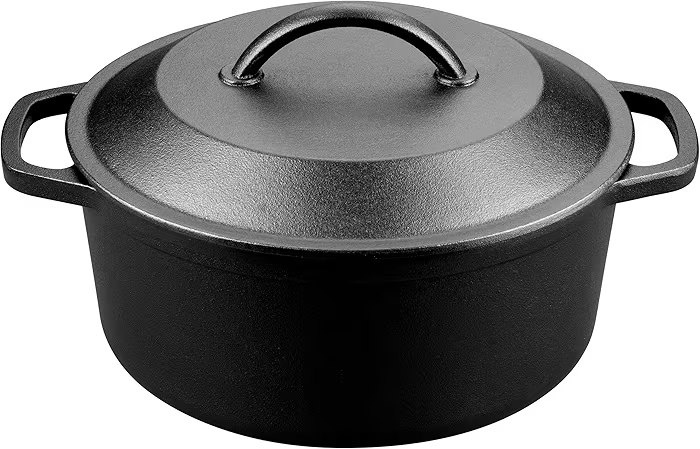
A 6-quart heavy-bottomed pot or Dutch oven (this is non-negotiable for even caramelization)
A sharp chef’s knife (slicing all those onions with a dull knife is actual torture)

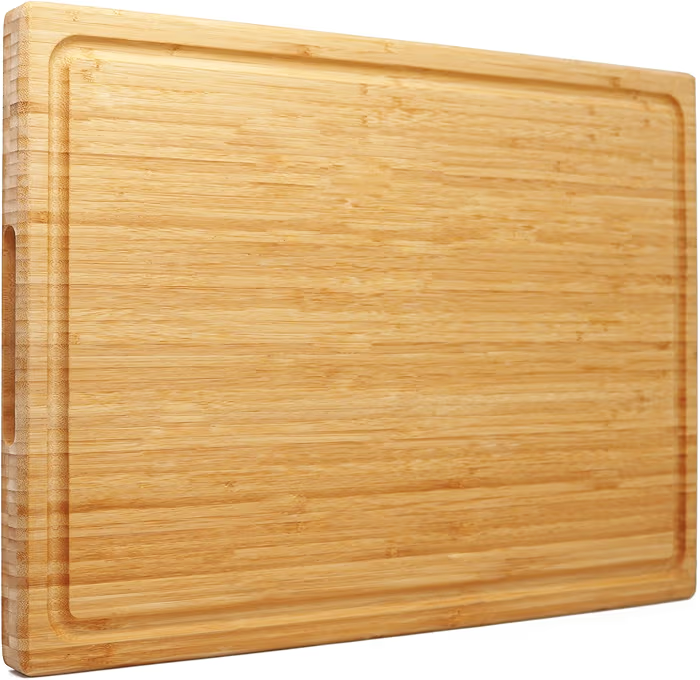
A large cutting board with plenty of workspace
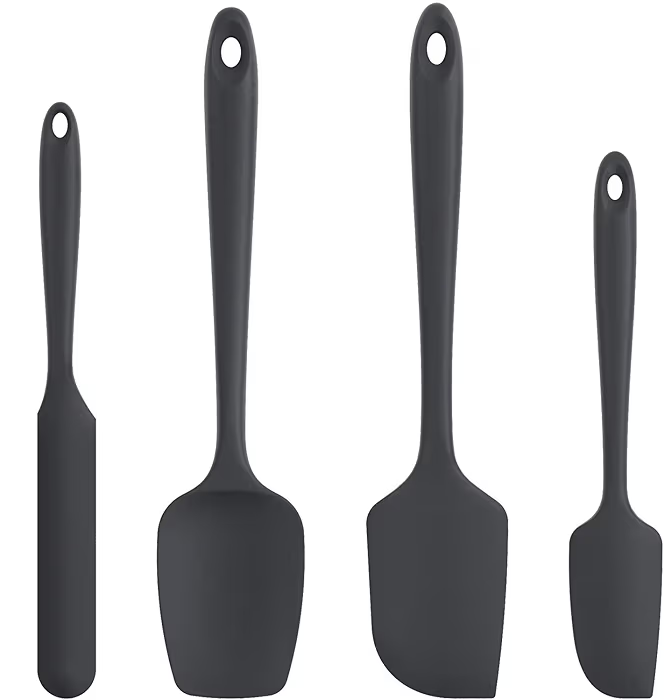
A sturdy wooden spoon or heat-resistant silicone spatula for all that stirring
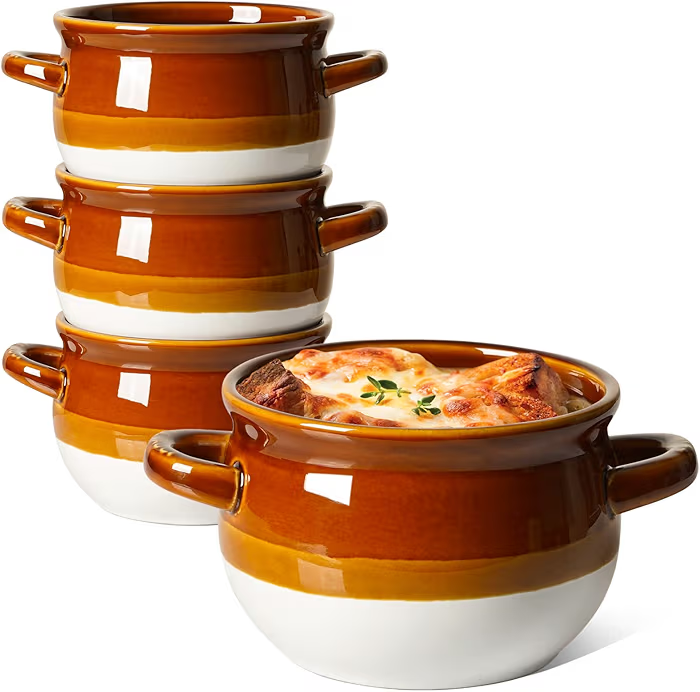
Oven-safe French onion soup bowls with handles (ceramic crocks are perfect)
A reliable box grater for fresh cheese
A deep ladle for serving
Kitchen tongs for handling hot bowls
How to Make the Best French Onion Soup (Step-by-Step)
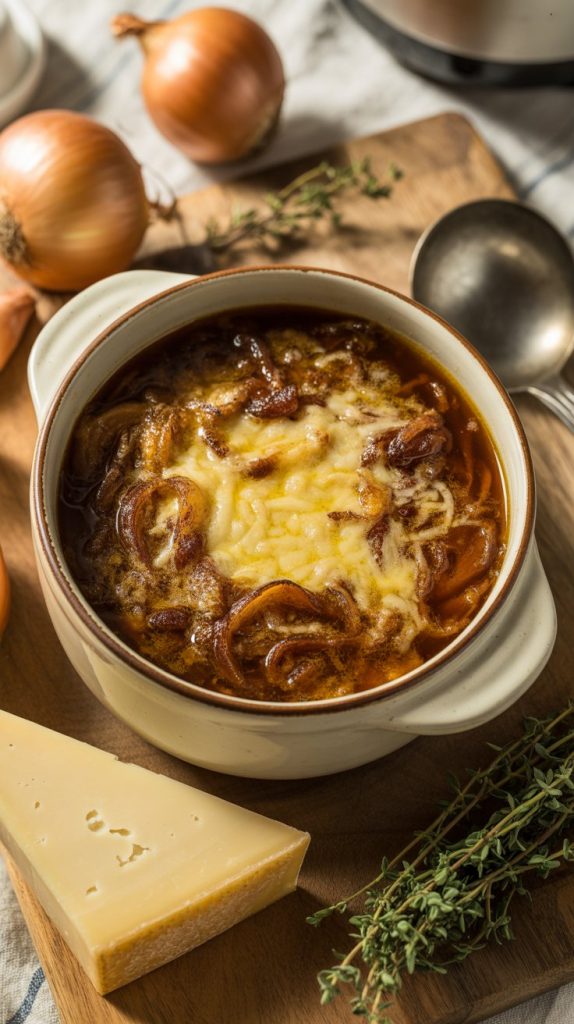
This is where the fun begins. And yes, I said “fun”—caramelizing onions becomes therapeutic after the first 10 minutes.
Step 1: Caramelize the Onions Like You Mean It
This is the heart and soul of the recipe.
First, grab your sharpest chef’s knife and a spacious cutting board—you’ll need the real estate when tackling 5-6 large onions.
A sharp blade makes this job almost meditative instead of a tearful nightmare.
- Melt butter and oil in your heavy-bottomed Dutch oven over medium-low heat.
- Add your sliced onions.
- Season with salt, pepper, and that pinch of sugar.
- Stir occasionally with a wooden spoon, but not constantly. Onions need space too, you know.
Ever wondered why some people burn their onions? Usually impatience. Keep the heat medium-low, and let them slowly turn into a dark golden-brown miracle.
Your quality cookware will make this so much easier—cheap thin pots create hot spots that lead to burning.
Important: This step takes 40–50 minutes. Don’t rush it. Your future self will high-five you.
Step 2: Build the Flavor Base
Once the onions turn dark and caramelized, sprinkle in the flour. The flour thickens the broth slightly and makes the texture luxuriously silky.
Stir for a minute with your trusty wooden spoon to cook out the raw taste. Add the garlic.
Watch it go fragrant. Smell that? That’s your kitchen announcing your culinary superiority.
Step 3: Add Broth and Wine
Pour in:
- Beef broth
- A splash of dry white wine (if using)
- Thyme sprigs
- Bay leaf
Bring everything to a gentle simmer. Let it cook for 20–25 minutes so all the flavors meld. Think of this step like the soup equivalent of letting gossip stew. It gets better the longer it sits.
Step 4: Prep the Toppings
Toast slices of French bread in the oven until they turn golden and crisp. I like to rub mine with raw garlic while still warm. Makes a difference.
Now grab your box grater and shred that beautiful Gruyère fresh. Restrain yourself from eating the cheese straight off the cutting board. (I fail at this 50% of the time.)
Step 5: Assemble and Broil
Ladle the soup into your oven-safe bowls using a deep ladle—you want to capture plenty of those precious caramelized onions in each serving. Place your cheesy toast on top. Add more cheese—because why pretend restraint now?
Use kitchen tongs to carefully transfer the filled bowls to a baking sheet, then broil until you see bubbling brown edges. Resist the urge to poke it. You’ll burn your finger. Ask me how I know.
Tips for Perfect French Onion Soup Every Time
Here’s where I share the wisdom I gained from every mistake I made so you don’t repeat them.
Choose the Right Onions
Yellow onions caramelize best. Sweet onions get too sweet. Red onions turn weird. Stick with the gold standard.
Don’t Rush the Caramelizing
You know this already, but it’s worth repeating. Low and slow wins. And seriously, that heavy-bottomed pot is worth every penny for this step alone.
Use Good Beef Broth
The broth is half the recipe. Use something flavorful. Homemade is incredible, but store-bought works if you choose a rich version.
Use Fresh Bread
Day-old works too, but don’t use rock-hard bread. You want crunch, not a dental bill.
Invest in Proper Soup Bowls
Those classic oven-safe crocks with handles aren’t just for aesthetics—they handle broiler heat like champions and make the whole experience feel restaurant-worthy.
Regular bowls will crack under high heat, and nobody wants that disaster.
Why This Recipe Works So Well
Ever notice how some recipes lean too heavily on salt instead of technique? This one hits different because the flavor comes from:
- Actual browned onions (achieved with proper equipment and patience)
- Balanced acidity from wine
- Savory richness from beef broth
- The ultimate cheesy crust
Everything works together, not against each other. That’s why every spoonful feels like a warm hug.
Customizations You’ll Love
Because who doesn’t like options?
1. Add Mushrooms
Sauté mushrooms with the onions for extra umami. I love doing this when I feel fancy. Your wide-bottomed Dutch oven gives you plenty of room for the extra ingredients.
2. Make It Vegetarian
Use vegetable broth. Add a splash of soy sauce for depth. It won’t taste identical, but it’ll still taste amazing.
3. Use a Cheese Blend
Add Swiss, Parm, or fontina to the Gruyère. Just don’t swap Gruyère completely if you want that classic French onion vibe. Remember—freshly grated with your box grater melts infinitely better.
4. Add a Splash of Brandy
Some French chefs swear by this. It adds warmth and complexity.
How to Store and Reheat French Onion Soup
This soup actually gets better the next day. Seriously.
- Store it in an airtight container for up to 4 days.
- Reheat it on the stovetop in your trusty Dutch oven until it simmers.
- Toast fresh bread and broil with cheese again (never reheat the bread in the soup unless you enjoy soggy sadness).
What to Serve with French Onion Soup
You can serve it as a main dish or a starter. I love pairing it with:
- Crisp green salad
- Roasted chicken
- Grilled steak
- Soft dinner rolls
- A glass of dry white wine (because why not?)
Common Mistakes to Avoid
I feel like a friend should warn a friend, so here you go:
Undercaramelizing the onions You’ll end up with bland broth. Not fun.
Using the wrong pot A thin, cheap pot creates hot spots that burn your onions before they caramelize. Invest in quality cookware—it’s a game-changer.
Using weak broth Your soup will taste like onion water. Ew.
Burning the onions They turn bitter. Don’t ask how long it took me to learn this.
Using pre-shredded cheese It doesn’t melt right. Freshly shredded with a proper grater wins every time.
Not having oven-safe bowls Using regular bowls under the broiler is a recipe for cracked dishes and ruined dinner. Get the real deal.
My Personal Experience With This Recipe
The first time I made French onion soup, I thought I nailed it.
I didn’t. The onions were pale, the broth felt thin, and the cheese refused to melt like the photos online (why do they always look perfect?!).
But the second time? Absolute perfection. I slowed down, trusted the process, used good cheese, and—here’s the kicker—I finally invested in a proper Dutch oven instead of using my flimsy stockpot.
I remember tasting that first spoonful and literally saying out loud, “Okay wait… I made this?”
So if you’re nervous, don’t be. This recipe works. And when you smell those onions caramelizing, you’ll know you’re on the right track.
FYI, that smell might convince your neighbors that you launched a French bistro out of your kitchen.
Final Thoughts
Here’s the truth: making the best French onion soup doesn’t require fancy skills or European ancestors.
You just need patience, good onions, quality broth, a generous hand with the cheese, and—let’s be real—the right tools for the job.
A heavy-bottomed pot, sharp knife, and proper soup bowls turn this from a struggle into an absolute joy.
You now have everything you need to create a bowl that tastes unbelievably rich, comforting, and kind of elegant in that effortless, “I totally didn’t spend an hour caramelizing onions” way.
So grab your pot, crank up some music, and get cooking.